The Best and Worst Figure Skating Fashion Looks of the Season: Olympic Glam and Style Can Succeed or Fail
Figure skating is one of the few sports where a costume can change the way a performance feels before the first jump lands. A sleeve, a color story, a neckline, a glove, even the sparkle density can tell the crowd what kind of program is coming.
That is why skating fashion matters. At the Winter Olympic Games and World Championships, costumes are not decoration. They are part sportswear, part character design, part personal signature. The best looks help the skating look faster, cleaner, sharper, or more emotional. The worst ones fight the program, distract from the body line, or look like they were designed for a theme party instead of elite competition.
This season’s most memorable skating style showed two clear directions: sleek athletic minimalism and full theatrical identity. When those ideas worked, they gave us Olympic-level glamour. When they missed, they reminded us that more rhinestones do not always mean more impact.
The best looks made athleticism feel like luxury
The strongest figure skating fashion looks this season understood the assignment: show the skater, support the music, and survive four minutes of extreme movement.
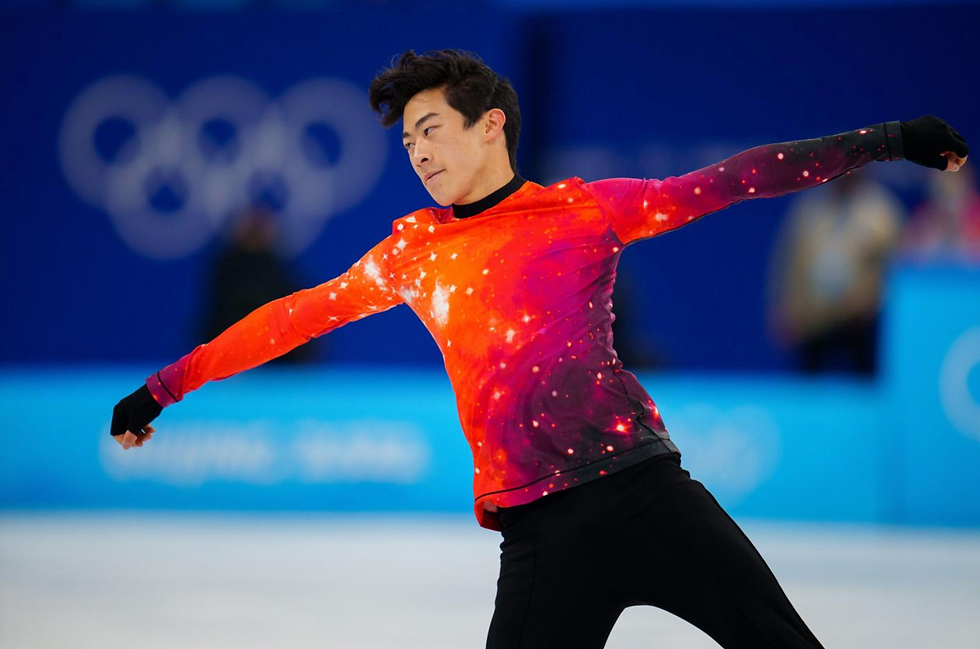
Nathan Chen’s “Rocketman” look turned sportswear into stagewear
Nathan Chen’s Olympic free skate costume for “Rocketman” remains one of the best examples of modern men’s skating fashion. Designed by Vera Wang, the look used an athletic shirt base with vivid orange, red, yellow, and purple tones that felt energetic without becoming cartoonish.
It worked because it matched Chen’s skating. His style is fast, direct, and explosive. A heavy jacket or ornate vest would have slowed the eye. Instead, the costume moved like high-performance sportswear, with enough color to carry the Elton John reference.
The result was a smart middle ground between costume and competition gear. It looked like something built for rotations, edges, and medals, not just for a still photo.

Yuzuru Hanyu’s kimono-inspired elegance showed personal mythology
Yuzuru Hanyu has long treated costume as part of storytelling, and his Olympic-era looks kept that reputation intact. His white, blue, and gold costume for “Ten to Chi to” had the feeling of a ceremonial garment, with references that suggested armor, flowing fabric, and Japanese visual tradition.
The success came from proportion. The details framed his shoulders and arms, but they did not bury his movement. The pale color palette made his lines look longer, while the gold accents added ceremony.
This is where personal expression in skating fashion becomes powerful. The look did not just say “beautiful.” It said something about identity, history, and the kind of skater Hanyu has built himself to be.
Gabriella Papadakis and Guillaume Cizeron proved quiet can be unforgettable
Ice dance often invites extravagance, but Gabriella Papadakis and Guillaume Cizeron’s 2022 Olympic free dance look showed the force of restraint. Their soft, simple costumes for their lyrical program avoided the usual ballroom shorthand. No heavy fringe. No harsh sparkle explosion. No costume gimmick.
Instead, the look focused on texture, transparency, and flow. The costumes felt close to contemporary dance, which suited their style. Their skating is built on breath, unison, and suspended movement, so the clothing had to feel light.
That minimalism made the program look more adult and more expensive. It also reflected a wider trend in sports fashion: elite performance clothes that use subtle detail instead of obvious decoration.
Madison Chock and Evan Bates made fantasy feel chic
Madison Chock and Evan Bates have never been afraid of concept-driven fashion, and their World Championship looks have shown how far ice dance can push character without losing polish. Their alien-inspired free dance costuming, with sculptural shapes, iridescent tones, and body-conscious lines, was weird in the best possible way.
This could have gone wrong quickly. Sci-fi on ice can look cheap if the fabric shines the wrong way or the shapes become too literal. Their costumes worked because the look had a high-fashion finish. It suggested creature, myth, and otherworldly movement without turning into Halloween.
In a field where many teams still rely on predictable romance styling, Chock and Bates made a case for risk.
The weakest looks confused drama with clutter
Bad skating fashion is rarely boring by accident. More often, it tries too hard. A designer adds extra straps, mismatched mesh, one more sleeve detail, another crystal pattern, and suddenly the skater has to compete against the costume.
The worst figure skating fashion looks of the season were not always disasters. Some had strong ideas buried under too much styling.
“Bolero” costumes keep falling into the same trap
Maurice Ravel’s “Bolero” is a dangerous music choice for costume design. It invites red, black, severity, sensuality, and repetition. That can work, but it can also become heavy fast.
Kamila Valieva’s Olympic “Bolero” costume was memorable, but not always for the right reasons. The red and black palette, sharp details, gloves, and intense styling created a strong image. Yet the look also felt overloaded. It told the audience how dramatic the program was before the skating had room to build.
That is the challenge with highly literal music styling. If the costume arrives at full volume, the program has nowhere to grow.
Some 1980s rhythm dance looks felt like costume parties
The Olympic rhythm dance theme brought out plenty of fun, but it also produced some of the season’s clearest fashion misfires. The 1980s can be a gold mine: neon color, strong shoulders, metallic fabrics, sharp graphics, and pop attitude. It can also become a rack of party-store references.
A few teams leaned too hard into aerobics class energy, faux-leather sass, and loud color blocking. The result was entertaining, but not always flattering on the ice. When a rhythm dance costume looks more like an impersonation than a performance garment, it breaks the spell.
The best 1980s-inspired looks borrowed the decade’s confidence. The weakest ones copied its clichés.
Illusion mesh remained skating’s most common problem
No single detail causes more damage to a skating costume than mismatched illusion mesh. When it works, it creates lightness and support. When it fails, it chops up the body line and pulls focus from the choreography.
At both the Olympics and World Championships, several otherwise strong costumes lost polish because their mesh panels did not match the skater’s skin tone or had a dull, gray cast under arena lighting. This is especially noticeable in close-up camera shots, where the fabric can look like athletic tape instead of an invisible support layer.
This is not a small technical issue. Skating is judged in motion, but it is watched in high definition. Every seam shows.
The plain black men’s costume needs a reset
Minimalism can be powerful. A clean black costume can frame speed, height, and edge quality. But there is a thin line between refined and unfinished.
Men’s skating still relies too often on the black shirt, black pants, and a few scattered crystals. At major events, that can feel underdesigned beside the detail given to women’s and ice dance costumes. The issue is not masculinity or simplicity. The issue is lack of intention.
Ilia Malinin’s more tailored, character-led looks have shown one way forward. A costume can still feel athletic and masculine while using texture, fit, color, or silhouette to say something. The future of men’s skating fashion should not be limited to “practice top, but shinier.”

The season’s biggest trends came from sportswear and self-expression
The Best and Worst Figure Skating Fashion Looks of the Season: Olympic Glam and Style Fails reveal a sport in transition. Skating costumes are becoming more athletic, more personal, and more camera-aware.
Here are the trends that shaped the most talked-about looks.
Trend | Why it worked when done well | Why it failed when overdone |
Athletic stretch fabrics | They let skaters rotate, lift, and land with less visual bulk | They looked too casual without strong design details |
Jewel tones | They stood out under cold arena lighting | They became muddy when paired with too many accent colors |
Sheer panels and mesh | They created softness and movement | They looked cheap when the tone or texture was off |
Gender-fluid styling | It expanded what elegance can look like on the ice | It lost impact when treated as shock value rather than design |
Concept costumes | They helped programs feel specific and memorable | They became too literal when every detail explained the music |
The larger shift is clear. Skaters want costumes that feel like them. They are not just dressing as swans, princesses, heartbreakers, or ballroom archetypes. They are showing nationality, pop taste, personal history, music fandom, and performance identity.
That is good for the sport. It makes competitions more visually distinct. It also gives fans more to remember after the scores fade.
What separates a standout from a style fail
A great skating costume has to pass three tests.
It must read from the upper bowl.
The audience in the arena needs to understand the shape, color, and mood from far away.
It must survive the close-up.
Television cameras catch mesh, seams, sweat, crystals, and unfinished edges.
It must move with the skater.
Nothing should flap, bunch, restrict, or hide the body line during jumps, spins, lifts, and footwork.
That is why the best looks often seem simple at first. They have a clear main idea. Nathan Chen’s “Rocketman” costume was about speed and color. Papadakis and Cizeron’s Olympic look was about breath and softness. Hanyu’s costume was about grace, ritual, and personal symbolism. Chock and Bates built an entire world, but they kept the silhouette readable.
The worst looks tend to lack that discipline. They use too many ideas at once. They explain the music too loudly. They chase sparkle instead of shape.
Figure skating will always reward drama. It should. This is a sport where rhinestones and triple axels live in the same frame. But the most successful costumes know when to stop.
The season’s fashion lesson is simple: the costume should make the skating look inevitable. When design, music, and movement line up, a look becomes part of the performance. When they clash, even the most expensive crystals cannot save it.


Comments